
AI for commercial real estate
Find the gaps.
Build the fix.
We audit how your firm actually works — surfacing shadow AI, inefficiencies, and security gaps — then build governance and automation around what we find.
Audit
We map how work actually moves through your firm and find the bottlenecks, inefficiencies, and shadow AI already in play — then rank every fix by what it returns.
Learn more
Governance
We build your AI readiness framework — policy, approved tools, and data boundaries your counsel can sign off on — so adoption happens without exposure.
Learn more
Security
We deploy private AI agents and dedicated infrastructure inside your own cloud, so the work gets done without deal data ever leaving your control.
Learn more
Education
White-label AI learning for large enterprises: courses, live cohorts, community, and ongoing education support under your brand.
Learn more
Training
Ongoing enablement for integration clients after we build. Playbooks, go-live workshops, and refreshers so the systems we ship get used.
Learn more
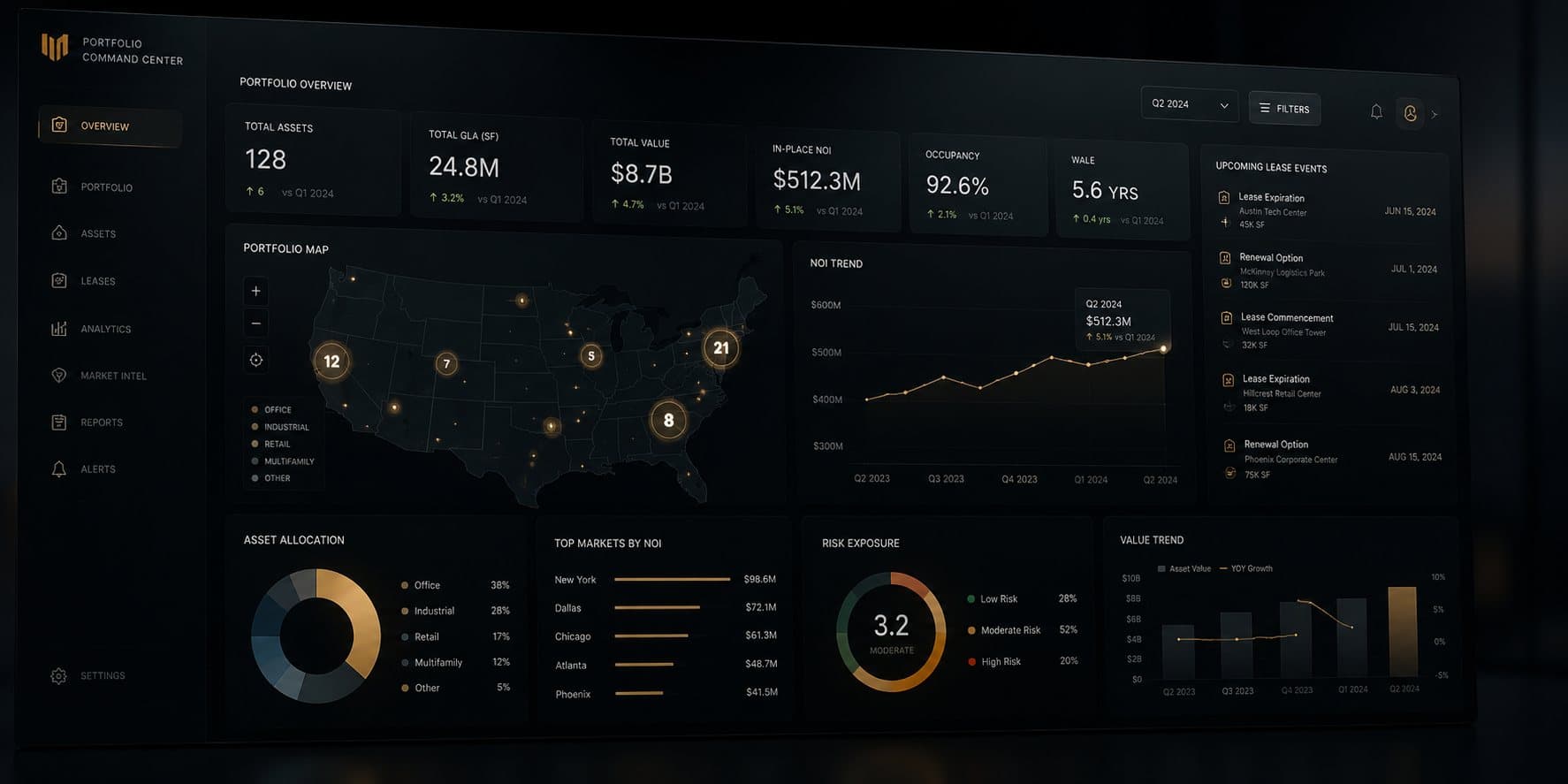
The kind of system we build — private, governed, on your infrastructure
Why security first
In CRE, your data is the deal.
Rent rolls, investor PII, LP commitments, off-market terms — the data that makes AI useful is exactly the data you cannot afford to leak. Most AI tools route it through shared public endpoints you don't control, retained under terms you didn't negotiate.
Shadow AI is already inside
Staff paste rent rolls and LOIs into consumer chatbots today — unlogged, unapproved, unrecoverable. That operating data just left your control, under terms nobody read.
Public endpoints, shared models
Typical AI SaaS runs your prompts through multi-tenant infrastructure, with vendor terms that can change under you. Your NDA obligations don't.
LPs and regulators are asking
Institutional investors increasingly require documented data controls before their information touches any AI system. "We're not sure" is not an answer that closes.
How we work
From first call to production in four weeks.
Four steps, run the same way every time. The audit stands on its own — the findings are yours even if we stop there.
- 01
Audit
Interview your team, map workflows, data, and tooling. Find where hours and dollars leak.
- 02
Roadmap
A ranked plan: what to automate, what it returns, and what it must never expose.
- 03
Build
Agents and integrations deployed on hardened, private infrastructure — secure by default.
- 04
Operate
Managed, monitored, and documented. You own the accounts, the keys, and the code.
Why PropTech Integrations
What leading looks like in practice.
Built by people who run both sides
Production software engineering paired with hands-on real estate operating and fund management experience. We build the systems we would trust with our own investors' data — because we do.
Security is the default, not an upsell
Deployments start at maximum security; any relaxation is a written, reviewable decision you sign off.
Everything as code
Infrastructure is written, versioned, and reviewable — your team or auditors can inspect every line we ship.
Transparent economics
You know your costs upfront before we deploy — fixed-scope engagements, flat infrastructure costs, no per-message fees.
The readiness framework
Score your firm’s AI readiness in two minutes.
The five-dimension scoring model we use inside every audit — published in full, with an interactive self-assessment. No email required; scores stay in your browser.
FAQ
Straight answers for operators and their counsel.
The facts answer engines and buyers both need: who we serve, what an audit leaves you with, and how private AI differs from consumer tools.
What does PropTech Integrations do?
PropTech Integrations audits commercial real estate, CRE-adjacent, and financial firms for AI bottlenecks, shadow AI, and security gaps, then builds governance frameworks and private AI infrastructure. Separately, we deliver enterprise AI education programs and ongoing training for integration clients so teams adopt what ships.
What is the difference between Education and Training?
Education is for large enterprises that want a white-label AI learning platform, courses, cohorts, community, and ongoing learning support under their brand. Training is ongoing enablement for PropTech Integrations integration clients after automations go live: playbooks, go-live workshops, office hours, champions, and refreshers on the systems we built.
What does Education include?
A white-label learning platform under the enterprise brand: self-paced courses, live workshops and cohorts, community spaces, memberships, progress tracking, mobile access, and ongoing program support for CRE, CRE-adjacent, and financial organizations.
What does Training include?
Post-integration enablement for clients where we have built automations: role-based playbooks, live go-live workshops, office hours, a champions program, and refreshers for new hires and new workflows.
Who is PropTech Integrations for?
Commercial real estate, CRE-adjacent, and financial firms — organizations whose work runs on confidential deal, asset, and capital data. That includes brokerage, development, construction, asset and property management, private equity and fund management, lenders, and capital-markets teams, plus advisors in the same information flow. We specialize there; we are not a horizontal AI shop for every industry.
What is shadow AI in commercial real estate?
Shadow AI is when staff paste rent rolls, LOIs, investor details, or other deal data into consumer chatbots or unsanctioned AI tools — unlogged, unapproved, and often in breach of NDAs or LP confidentiality duties.
What do clients keep after an AI Transformation Audit?
The findings are yours either way: an AI usage policy, approved-tool register, exposure map, and a ranked automation roadmap with the business case for each move — even if you do not proceed to implementation.
How is your AI infrastructure different from typical AI SaaS?
We deploy private AI agents and dedicated infrastructure inside your own cloud, with certificate VPN access and no public entry points. Deal data stays under your control instead of flowing through multi-tenant public endpoints.
How long does an engagement take?
Discovery is a short call. A typical path runs from first call to production in about four weeks: audit, roadmap, build, and operate. The audit stands alone if you stop there.
Next step
Book a discovery call.
Thirty minutes with the people who'd do the work. We'll tell you plainly whether an engagement makes sense — and where we'd start.